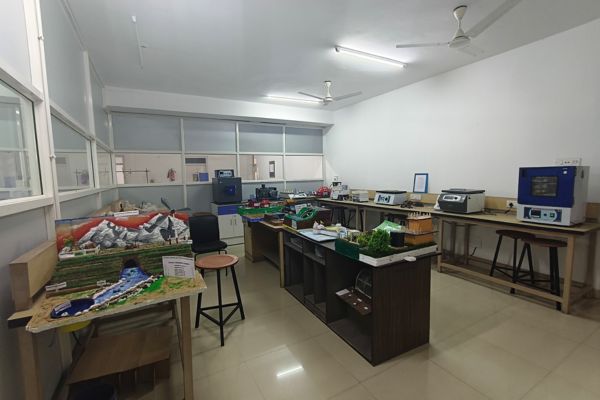
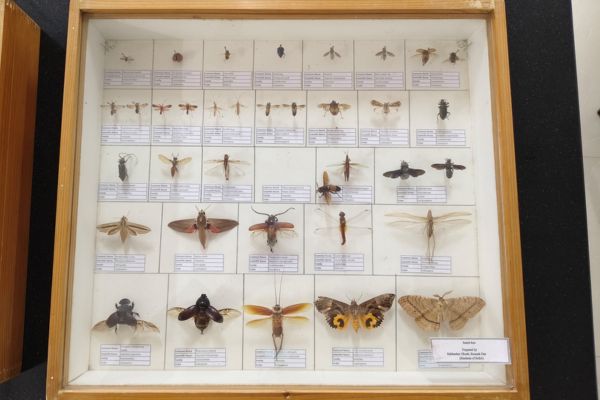
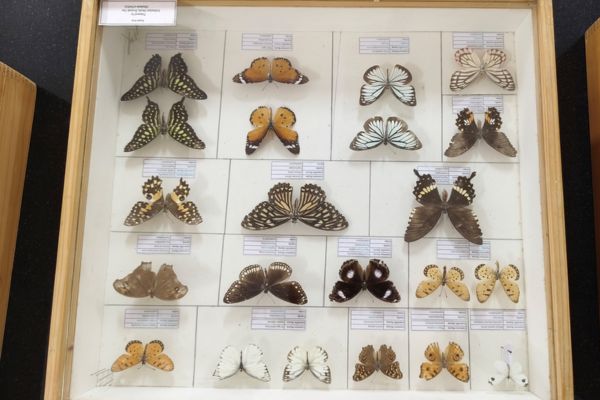
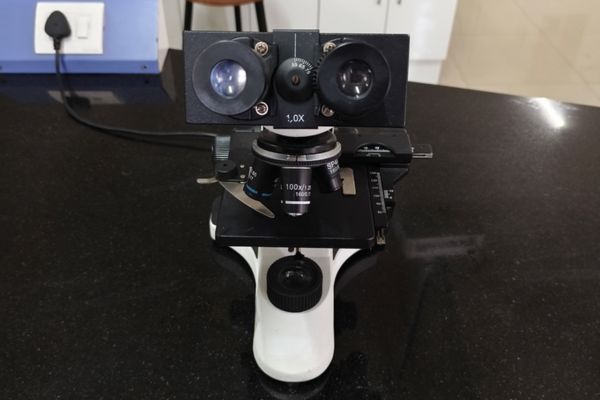
Over the past five years, the School of Smart Agriculture has undertaken, focused and application-oriented research aimed at strengthening crop productivity, resilience, and sustainability. The research initiatives have primarily concentrated on varietal evaluation, disease resistance assessment, and integrated plant protection strategies in key vegetable and field crops, aligning closely with regional argo-climatic needs and farmer-centric outcomes.
A major thrust area of research has been varietal trials in economically important crops, including okra, sunflower, maize, brinjal, and tomato. These trials were designed to evaluate the performance of different cultivars under local field conditions. Emphasis was placed on assessing yield potential, adaptability, and stability, with systematic recording of agronomic and morphological traits such as plant height, branching pattern, flowering behaviour, fruit or head characteristics, and overall growth vigour. Such evaluations have contributed valuable comparative data for identifying promising varieties suitable for cultivation under varying environmental conditions.
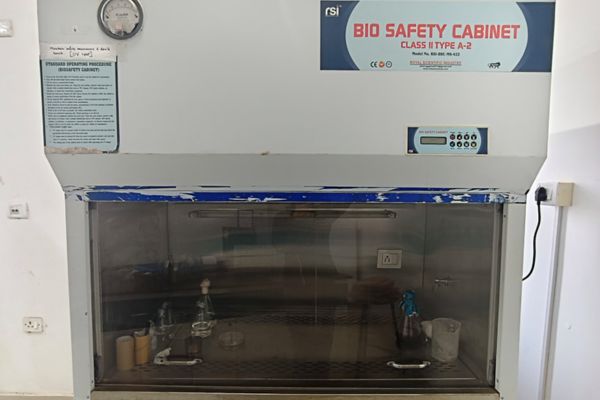
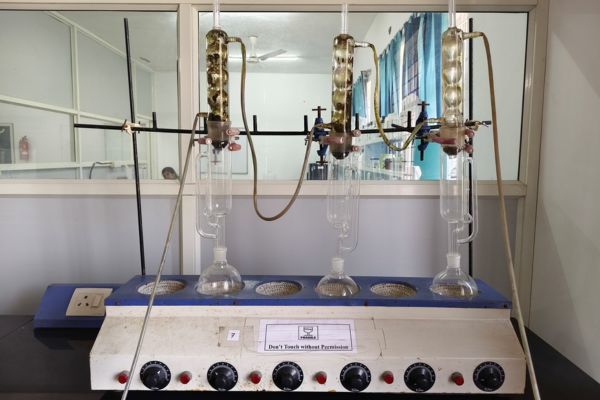
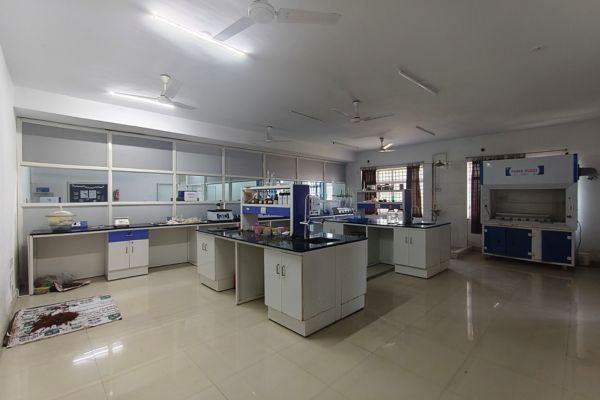
In addition to crop-based experimentation, systematic soil analysis was carried out in the experimental fields to support data-driven interpretation of varietal and disease response trials. Baseline and periodic soil sampling were undertaken to assess key physio-chemical properties, including soil texture, pH, electrical conductivity, organic carbon content, and available macro- and micronutrients. These analyses helped in characterising field variability and ensuring uniformity of experimental conditions across treatments. Soil health parameters were also used to correlate crop performance, disease incidence, and treatment efficacy with underlying soil fertility status.
In parallel, disease resistance screening formed a core component of the varietal trials. Natural disease incidence and symptom expression were monitored for major crop-specific diseases, allowing the identification of relatively tolerant or resistant genotypes. This integrated evaluation of morphological and pathological parameters enabled a more holistic understanding of genotype performance, particularly under biotic stress conditions, which is critical in the context of climate variability and increasing disease pressure.
Another important area of ongoing research at the school is the bio-efficacy evaluation of botanical and chemical treatments against economically significant phytopathogens. These studies aim to assess the effectiveness of selected plant-based formulations and recommended chemical fungicides or bactericides in managing crop diseases. The trials are being conducted under controlled and field conditions, with parameters such as disease severity reduction, crop response, and overall plant health being systematically recorded. The long-term objective of this research is to contribute toward integrated disease management strategies that balance efficacy with environmental safety.
A defining feature of the research ecosystem at the School of Smart Agriculture is the strong student–teacher partnership. Research activities are carried out through close mentorship, where students actively participate in trial planning, field experimentation, data collection, and analysis under faculty guidance. This collaborative approach has not only strengthened research outputs but has also enhanced experiential learning, critical thinking, and scientific temper among students.
Collectively, the research efforts of the last five years reflect the school’s commitment to practical, field-relevant, and sustainability-oriented agricultural research. By integrating varietal evaluation, disease resistance assessment, and plant protection studies, the School of Smart Agriculture continues to contribute meaningful insights toward improving crop performance and promoting resilient agricultural practices.
Research Activities of the Department of Smart Agriculture
Important Publications
- S. Chakraborty, S. Mahapatra, A. Hooi, B. Tejabhushan, Sk. H. Alam, C. Roy, “Assessing the wheat cultivars against spot blotch resistance using phenotyping and gene-based SSR markers,” Tropical Plant Pathology, Springer Nature, 2025.
- S. Chakraborty, S. Mahapatra, A. Hooi, B. Tejabhushan, Sk. H. Alam, P. L. Kashyap, “Unveiling the role of phenol and defense-related enzymes in host resistance to spot blotch × wheat pathosystem,” Cereal Research Communications, Springer Nature, 2025.
- S. Choudhury, S. Mahapatra, S. Chakraborty, A. Sen, Sk. H. Alam, A. Hooi, B. T. Bhushan, “Revitalizing the lentil crop by use of a native Trichoderma sp. for Fusarium wilt and collar rot disease management and plant growth promotion,” Biocontrol, Springer Nature, 2025.
- A. Chakraborty, “Impact of farm mechanization on the psychological health of the farmers: A holistic study in West Bengal, India,” Journal of Community Mobilization and Sustainable Development, 2025.
- A. Chakraborty, “Occupational hazards vs modernization of agriculture: The ideation and theorization,” International Journal for Current Sciences, 2025.
- S. Banerjee, R. Bekele, G. Abebe, “Milk production, composition and udder morphometric traits across various lactation stages of Boer goats and their crosses in Ethiopia,” Frontiers of Animal Science, 2025.
- H. W. Gebreslase, G. Klemetsdal, S. Banerjee, “Genetic analysis of test-day milk yield in sheep recorded at two governmental breeding and multiplication centers in Ethiopia,” Acta Agriculturae Scandinavica, Section A — Animal Science, 2024.
- S. Goshme, S. Banerjee, M. Rekik, A. Haile, E. Yitagesu, T. Getachew, “Evaluation and characterization of semen quality in rams of Menz, Dorper and Awassi crosses in different seasons in Ethiopia,” Livestock Research for Rural Development, 2020.
- S. Banerjee, “Morphometrical and production traits of Bengal sheep in West Bengal, India,” Animal Genetic Resources, Cambridge Core, 2015.
- T. Aseged, T. Getachew, S. Banerjee, “Participatory identification of breeding objectives and selection criteria for Begaria cattle breed,” Sustainability, 2022.
- A. Melesse, S. Banerjee, A. Abebe, A. Sisay, “Carcass and meat quality characteristics of Arsi-Bale goats supplemented with different levels of air-dried Moringa stenopetala leaf,” Journal of Agriculture and Rural Development in the Tropics and Subtropics, 2016.
- S. P. Chand, B. C. Saha, “Thupi-khejur Chari: A double-seeded variety of rice (Oryza sativa L.),” Agrica, 2024.
- C. Venkateshwarlu, B. Roy, B. C. Saha, “Residual heterosis in some quantitative characters in F₂ and F₃ generations in inter-varietal crosses of rice,” Journal of Agriculture and Technology, 2020.
- B. C. Saha, S. P. Chand, S. Purkayastha, T. K. Mandal, B. Mondal, “Genetic variability and multivariate analysis of agro-morphological traits in selected rice germplasm (Oryza sativa L.) of India,” International Journal of Advancement in Life Sciences Research, 2026.
- S. Bhattacharya, B. C. Saha, “Viviparous germination in Alpinia purpurata (Viell) K. Schum.,” Scientific Research Journal of Agriculture and Life Sciences, 2022.
LIST OF MOUs
- Bankers Institute for Rural Development ( BIRD), NABARD
- University of Greenwich ( United Kingdom)
- Association of Microfinance Institutions ( West Bengal)
- Bithi Farms Pvt Ltd.
- Chaltaberia Gano Unnayan Sanstha ( NGO)
- Abibruthi Farmers Producer Organization
Infrastructure